
Repair Potholes Before They Spread Across Your Pavement
Pothole Repair & Asphalt Patching in Shelton & Fairfield County for driveways and parking lots with surface craters or crumbled sections creating hazards and vehicle damage
All Time Paving and Seal Coating provides professional pothole repair and asphalt patching in Shelton and across Fairfield County for property owners dealing with damaged pavement that threatens vehicle suspension, creates tripping hazards, and allows water to erode the aggregate base beneath the surface. When a pothole forms, it signals that the asphalt structure has failed in that area—most often due to Connecticut’s intense freeze-thaw cycles—where moisture trapped beneath the surface expands as ice, forcing the pavement upward until it collapses into a crater that grows larger with each passing vehicle.
Patching involves saw-cutting away the damaged asphalt to expose clean, vertical edges, removing any loose or deteriorated base material, and stabilizing the stone foundation. We then fill the void with fresh hot-mix asphalt and compact the patch using vibratory rollers to match the surrounding pavement level perfectly. This process restores a smooth, load-bearing surface that prevents further deterioration and eliminates the safety hazard. Potholes expand rapidly in Connecticut because winter road salt and melting snow infiltrate the broken edges, repeatedly freezing and thawing to wash away the underlying support, causing the surrounding asphalt to break away under traffic stress and snowplow impact.
If you see potholes forming on your property or notice sections of pavement crumbling, reach out to discuss permanent repair options in Connecticut.
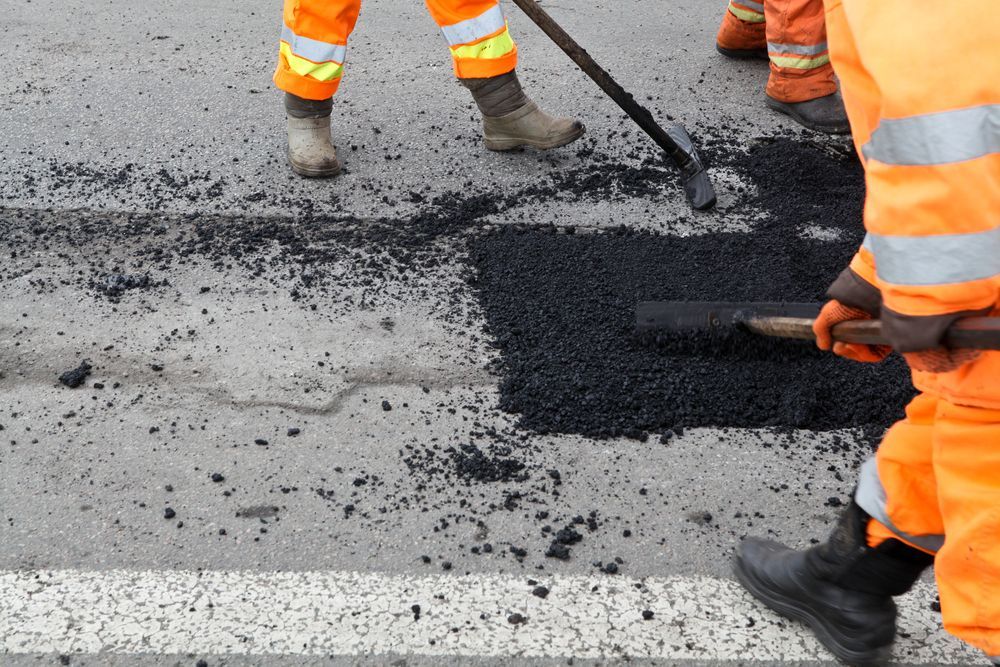
What Patching Does to Stop Pavement Breakdown
You prevent small failures from becoming expensive reconstruction projects by addressing potholes and damaged sections as soon as they appear. The hot-mix asphalt used for patching creates a thermal bond with the existing pavement edges when applied at the correct temperature, resulting in a permanent repair that supports heavy vehicle loads without sinking or pulling away. While "cold patch" materials are often used for temporary emergency fixes during a freeze, hot-mix is the professional standard in Connecticut, providing a durable, long-term solution that withstands the severe contraction and expansion of the freeze-thaw cycle.
After patching is complete, you will notice a level surface free of jarring impacts. Proper patching ensures that water drains away instead of pooling in craters, where it would otherwise freeze and turn into dangerous black ice. All Time Paving and Seal Coating ensures the patch is compacted flush with the existing pavement and that the edges are properly tacked and sealed. This is critical in the Northeast to prevent melting snow and road salt from working their way back into the repair area and undermining the aggregate stone base.
Patching works for isolated damage where the surrounding pavement remains structurally sound. Large areas of interconnected cracks—often called "alligator cracking"—widespread base failure, or pavement that has shifted due to intense frost heaving common in Fairfield County, require more extensive repairs or full resurfacing to restore safe, functional conditions.
What Property Owners Ask About Pothole Fixes
Asphalt patching involves material choices, timing considerations, and methods that determine how long the repair lasts under traffic and weather stress.
What causes potholes to form in asphalt?
Potholes develop when water infiltrates cracks, softens the base material beneath the asphalt, and allows the surface to break apart under traffic loads, with freeze-thaw cycles accelerating the expansion of initial failures.
How is a permanent patch different from a temporary fix?
Permanent patches use hot mix asphalt applied to clean, prepared edges and compacted to full density, while temporary cold patch is a stopgap material that fills the hole but does not bond as effectively or withstand long-term traffic.
When is the best time to repair potholes?
Patching should be scheduled as soon as damage appears and weather allows hot mix application, ideally in spring through fall when pavement temperatures support proper compaction and bonding.
Why do potholes in Burlington worsen over winter?
Freeze-thaw cycles force water trapped in pavement cracks to expand as ice, breaking apart weakened asphalt and enlarging potholes with each cycle, while plows and salt further stress the damaged areas.
What preparation does a pothole need before patching?
The damaged area is cut to clean edges, loose debris and failed asphalt are removed, and the base is checked for stability and repaired if needed so the new patch rests on solid, load-bearing material.
When your pavement shows signs of pothole damage or crumbling sections, contact All Time Paving and Seal Coating to schedule pothole repair and asphalt patching in Connecticut.