
Prepare Surfaces for New Asphalt Without Full Removal
Asphalt Milling in Shelton & Fairfield County for parking lots and roads with surface deterioration but stable base layers.
All Time Paving and Seal Coating provides asphalt milling services for property owners and municipalities in Shelton and across Fairfield County who need to remove the top layer of pavement before resurfacing. When your parking lot or roadway shows surface cracking, raveling, or weathering but the base remains stable, milling removes damaged asphalt without the cost and disruption of full pavement removal. This process creates a clean, level surface that bonds effectively with the new asphalt layer and maintains proper elevations at curbs, drainage inlets, and building entrances—essential for ensuring proper drainage and preventing hazardous ice accumulation during Connecticut’s winter months.
The work uses a milling machine equipped with a rotating drum covered in carbide teeth that grind away the top one to three inches of asphalt. The machine controls depth precisely, leaving the existing base intact and ready for resurfacing. Milled material is collected and hauled away for recycling, reducing waste compared to full pavement removal. The milled surface has a rough texture that helps the new asphalt layer adhere, preventing delamination and extending pavement life. Milling also corrects surface irregularities and removes damage caused by years of heavy traffic, snowplow friction, and the seasonal expansion and contraction typical of the Northeast.
Request milling services before your resurfacing project to prepare the pavement and maintain proper site elevations in Connecticut.
How Milling Reduces Resurfacing Costs and Material Waste
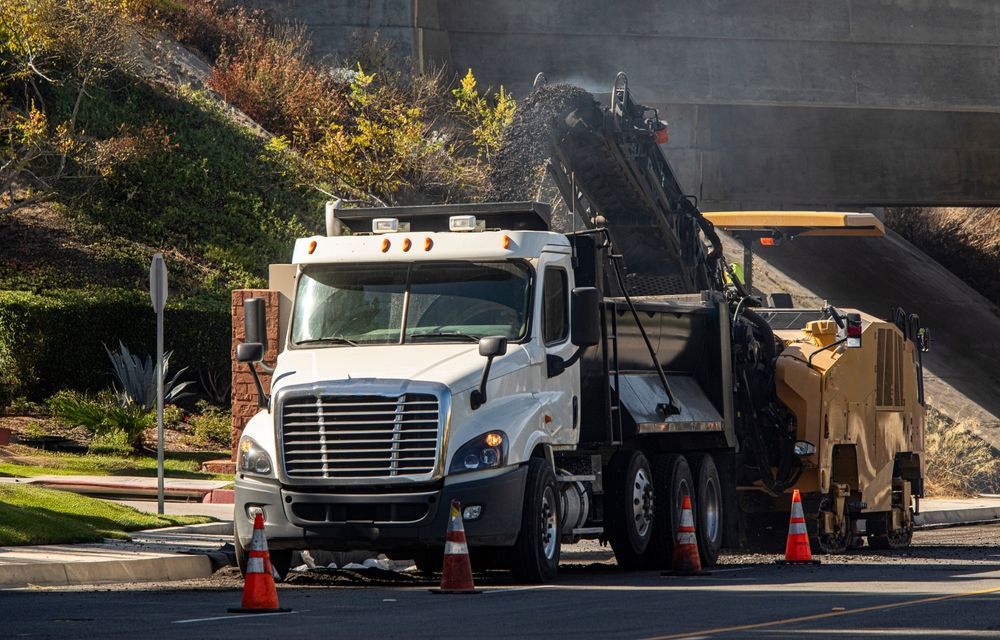
You will see a milling machine move across the pavement, removing asphalt in controlled passes while a conveyor loads the material into trucks for transport. The depth is monitored continuously to avoid cutting into the base layer, which would require additional repairs. After milling, the surface is swept clean of debris, leaving a stable, textured base ready for the asphalt paver.
After completion, the pavement surface will sit at the correct elevation relative to curbs, catch basins, and building entrances, preventing water from draining toward structures—a vital feature for preventing water ponding that leads to hazardous ice patches during Connecticut’s winter months. All Time Paving and Seal Coating uses milling to prepare parking lots, roadways, and large paved areas for resurfacing without adding unnecessary height to the pavement. You will notice a smoother finished surface after the new asphalt is placed, with no rutting or low spots that collect water.
Milling is faster and more cost-effective than full pavement removal because the existing base does not need replacement. The process also reduces the amount of new aggregate base required, lowering material costs and shortening project timelines. Recycling milled asphalt is a standard, eco-friendly practice in the Northeast, where Reclaimed Asphalt Pavement (RAP) is repurposed into new bituminous mixes or used as sub-base material, significantly reducing landfill waste. Property owners benefit from maintaining proper drainage slopes and avoiding the need to adjust curbs, manholes, and utility covers that would be affected by adding new asphalt layers without milling.
Questions Property Owners Ask About Asphalt Milling
Property managers and municipal planners in Connecticut often ask about milling depth, surface preparation, and how milling differs from full pavement removal. These answers address common concerns about asphalt milling services.
What determines how much asphalt is removed during milling?
The depth depends on the condition of the surface layer and the thickness of the new asphalt. Most projects remove one to three inches to eliminate surface damage while preserving the base.
How does milling prevent water from draining toward buildings?
Milling maintains or restores the original pavement slope, keeping drainage paths directed toward catch basins or storm drains. This prevents pooling near entrances and loading docks.
When is milling a better option than full pavement removal?
Milling works when the base layer is stable and only the surface shows cracking or wear. If the base has failed or the pavement has deep structural damage, full removal and reconstruction are necessary.
Why is the milled surface rough after the machine passes?
The carbide teeth create a textured surface that helps the new asphalt bond to the existing base. This texture prevents the layers from separating under traffic loads.
What happens to the milled asphalt after removal?
The material is transported to a recycling facility where it is crushed and reused in new asphalt mixes or as aggregate base for other paving projects.
All Time Paving and Seal Coating coordinates milling with resurfacing projects to prepare pavement efficiently and control costs. Reach out to the team in Connecticut to discuss milling services and schedule site preparation before your next paving project.