
Organize Parking Areas With Durable Pavement
Commercial Asphalt Paving in Shelton & Lower Fairfield County for parking lots with failed drainage and crumbling pavement.
All Time Paving and Seal Coating installs asphalt parking lots for retail centers, office buildings, apartment complexes, and commercial facilities in Shelton and Lower Fairfield County that need new pavement or full lot replacements. When your parking area shows widespread cracking, ponding water, or uneven surfaces that create liability concerns, commercial paving restores safe vehicle access and prepares the lot for striping. This service coordinates with property managers, general contractors, and business owners to minimize disruption during construction.
The process begins with a site review to assess traffic flow, drainage requirements, and pavement thickness needed for the expected vehicle load. Existing pavement is removed if the base has failed, or the surface is milled if only the top layer needs replacement. Grading establishes slopes that direct water to catch basins, preventing standing water—which New England’s harsh freeze-thaw cycles can quickly turn into hazardous ice patches and potholes. A compacted base is installed, followed by hot asphalt applied in layers designed to handle higher traffic volumes and heavy snow removal equipment. The finished surface provides a smooth, dense pavement ready for line striping and parking space layout.
Request a project consultation to discuss your parking lot paving needs and review construction timelines in Connecticut.
How Commercial Paving Improves Property Function
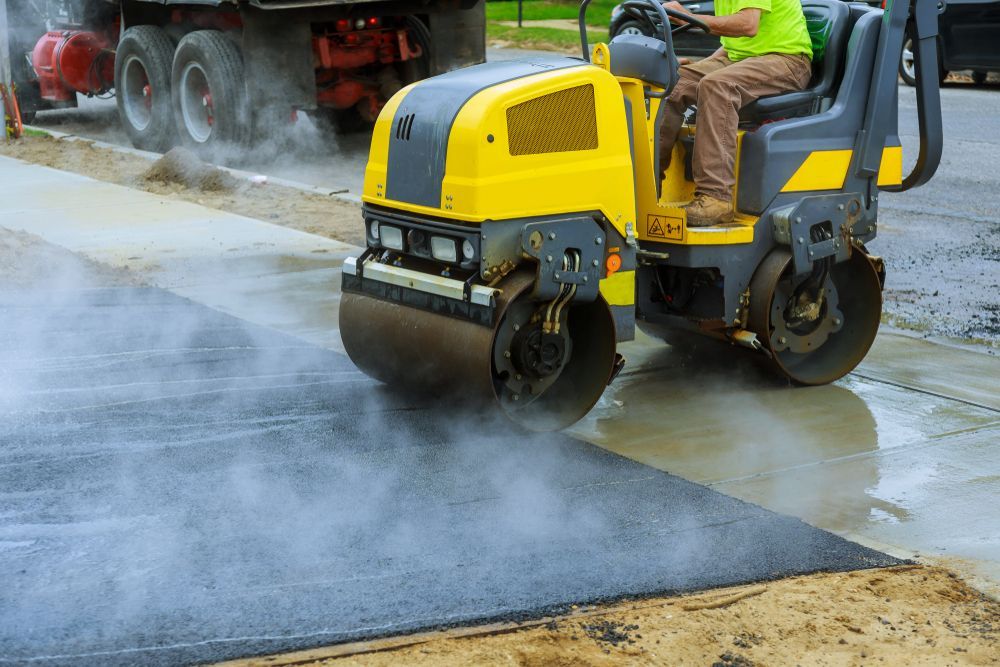
You will see crews use milling machines to remove old asphalt or excavators to dig out failed pavement and unsuitable soil. The base is installed in compacted lifts, with laser grading to ensure proper drainage across the entire lot. Asphalt is placed with pavers that maintain consistent thickness and width, then compacted with heavy rollers to create a dense surface that resists rutting under truck traffic and delivery vehicles.
After completion, your parking lot will have a uniform black surface free of potholes, smooth transitions at entrances and loading areas, and clearly defined drainage paths. All Time Paving and Seal Coating handles new parking lot construction, resurfacing over stable existing pavement, and full pavement replacement when the base has deteriorated. Tenants and customers will notice easier vehicle movement, elimination of puddles that splash pedestrians, and a professional appearance that reflects well on your business.
The construction timeline depends on lot size, site access, and weather conditions, with most projects phased to keep portions of the lot open during work hours. In Connecticut, our primary paving season runs from spring through late fall, as asphalt plants typically close during the winter months. We carefully time large commercial projects around the New England weather to ensure dry base preparation and optimal temperatures for asphalt compaction. Resurfacing projects take less time than full reconstruction because the existing base remains in place. Pavement designed for commercial use includes thicker asphalt layers and a stronger base compared to residential work, which extends the lifespan under constant vehicle traffic, heavy loads, and seasonal frost heaving.
Questions Property Owners Ask About Parking Lot Paving
Property managers and business owners in Connecticut often ask about project phasing, pavement thickness, and how to maintain traffic flow during construction. These answers address common concerns about commercial asphalt paving.
What thickness of asphalt is required for a commercial parking lot?
Most lots require three to four inches of asphalt over a compacted aggregate base. Areas with heavy truck traffic or loading zones may need thicker pavement to prevent rutting.
How is drainage planned for a parking lot?
The site is graded to slope toward catch basins, storm drains, or perimeter swales. Proper drainage prevents water from pooling on the surface and extends pavement life by reducing freeze-thaw damage.
When can the lot be reopened to vehicle traffic after paving?
Asphalt cools enough for light traffic within one to two days, but heavy vehicles and delivery trucks should wait three to five days. Striping is applied after the pavement fully cures.
Why does commercial paving cost more than residential work?
Parking lots require thicker asphalt, more extensive grading, and coordination to manage traffic during construction. The pavement must also meet higher load-bearing standards for continuous vehicle use.
What happens if the project needs to be completed in phases?
The lot is divided into sections, with temporary entrances and parking areas marked during each phase. This approach keeps your business accessible while new pavement is installed and cured.
All Time Paving and Seal Coating works with commercial property owners in Connecticut to develop paving plans that address drainage, traffic management, and long-term pavement performance. Call the team to schedule a site visit and discuss your parking lot project requirements.