
Stop Cracks Before They Destroy Your Pavement
Crack Filling in Shelton & Fairfield County for pavement showing early weathering or hairline splits before freeze-thaw cycles expand them into costly potholes.
All Time Paving and Seal Coating provides professional crack filling services in Shelton and across Fairfield County for property owners who need to protect asphalt driveways, parking lots, and commercial pavement from progressive seasonal deterioration. When you notice thin cracks appearing across your pavement surface, water begins working its way into the aggregate base, weakening the structure from underneath and setting the stage for costly repairs—such as severe potholes and frost heaves—if left unaddressed before the winter hits.
Crack filling involves cleaning debris from the fissures and applying a hot-applied rubberized sealant that binds to the asphalt edges, creating a flexible barrier that moves with New England’s extreme temperature shifts. Unlike the rigid fillers used in warmer climates, our sealant is designed to remain elastic during Connecticut’s deep freezes and spring thaws. Even small cracks allow significant water penetration, which saturates the stone sub-base and causes the pavement to shift or buckle when the ground freezes. Sealing cracks early prevents water from undermining the foundation and keeps small surface issues from turning into wide-scale alligator cracking or structural pavement failure caused by the relentless freeze-thaw cycle.
If you see cracks forming on your property, reach out to discuss how crack filling protects your asphalt investment in Connecticut.
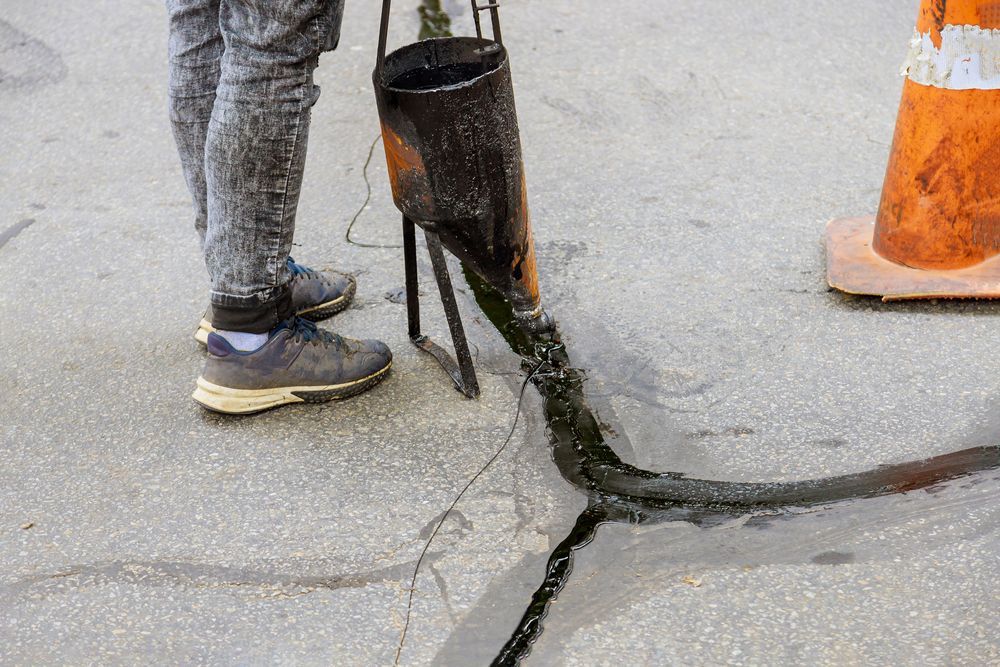
What Crack Filling Adds to Pavement Longevity
You extend the serviceable life of your pavement by addressing cracks while they remain narrow and manageable. The rubberized fill material used in crack sealing flexes with temperature changes, maintaining its bond to the asphalt edges through frigid Connecticut winters and humid summers without pulling away or cracking open again. This flexibility is vital in the Northeast, where extreme temperature swings stress rigid materials and cause standard asphalt to expand and contract significantly throughout the year.
After crack filling is complete, you will notice a smoother surface free of jagged edges, and water no longer pools in the crevices. This is a critical safety measure, as it prevents water from freezing within the cracks and creating dangerous "black ice" or tripping hazards. All Time Paving and Seal Coating ensures the sealant sits flush with the pavement surface so it does not interfere with drainage patterns or catch on snowplow blades during winter maintenance. The dark sealant blends with aged asphalt and clearly marks where maintenance has been performed, preventing the aggregate sub-base from becoming saturated.
Crack filling works best as part of a regular maintenance schedule, ideally performed before sealcoating to create a unified protective layer. This service does not repair structural failures, large potholes, or pavement that has already deteriorated into base-level damage. Those conditions—often seen as "alligator cracking" or deep frost heaves in the Shelton area—require professional patching or full reconstruction to restore safe, functional pavement.
What Property Owners Ask About Crack Maintenance
Asphalt maintenance raises practical questions about timing, application methods, and the conditions that make crack filling worthwhile in Connecticut.
When should cracks be filled?
You should schedule crack filling as soon as you notice cracks wider than a quarter inch, ideally in late spring or early fall when temperatures allow the sealant to cure properly and before winter freeze-thaw cycles begin stressing the pavement.
What causes asphalt to crack in the first place?
Cracks form when asphalt oxidizes and loses flexibility over time, allowing traffic loads and thermal expansion to stress the surface until it splits, with water infiltration accelerating the breakdown once cracks open.
How does crack filling differ from patching?
Crack filling seals narrow linear breaks to stop water entry and prevent expansion, while patching removes and replaces sections of damaged asphalt where the pavement structure has already failed beneath the surface.
Why does Connecticut weather make crack filling more urgent?
Freeze-thaw cycles force water trapped in cracks to expand as ice, widening the breaks with each winter event and creating a cycle of damage that accelerates pavement deterioration faster than in milder climates.
What preparation does the pavement need before filling?
The crew cleans each crack using compressed air or wire brushes to remove dirt, vegetation, and loose asphalt debris so the sealant bonds directly to solid pavement edges rather than sitting on top of contamination.
If your pavement shows signs of cracking or you want to set up a maintenance plan that prevents larger problems, contact All Time Paving and Seal Coating to review your property and schedule crack filling in Connecticut.