
Build the Foundation Your Pavement Needs
Grading and Digging in Shelton & Fairfield County for sites requiring excavation and base preparation before new asphalt installation
All Time Paving and Seal Coating handles grading and digging in Shelton and across Fairfield County for property owners preparing to install driveways, parking lots, or roadways that require stable subsurface conditions. Before asphalt goes down, the ground beneath must be excavated to the correct depth, graded to direct water away from structures, and compacted to support the weight of vehicles without settling or shifting during the intense freeze-thaw cycles of the Northeast.
Site preparation begins with removing existing pavement, organic soil, or vegetation to reach a stable subgrade, then shaping the surface to establish proper drainage slopes. In Connecticut’s varied and often rocky terrain, precision grading is the most critical step to ensure that heavy snowmelt and spring rain flow toward catch basins rather than saturating the base. Proper grading creates a level plane that accounts for the surrounding landscape, building foundations, and the specific pitch required to prevent ice dams and standing water during winter months.
Compaction equipment presses the processed stone base into a dense, load-bearing layer that resists shifting once the asphalt surface is installed. Poor drainage leads to water infiltration that destroys a sub-base when it freezes and expands, causing the pavement above to crack, buckle, or develop deep potholes as the ground "heaves" beneath it.
If you are planning a new paving project or replacing failed pavement, contact us to discuss site preparation and grading work in Connecticut.
Why Proper Grading Controls Pavement Performance
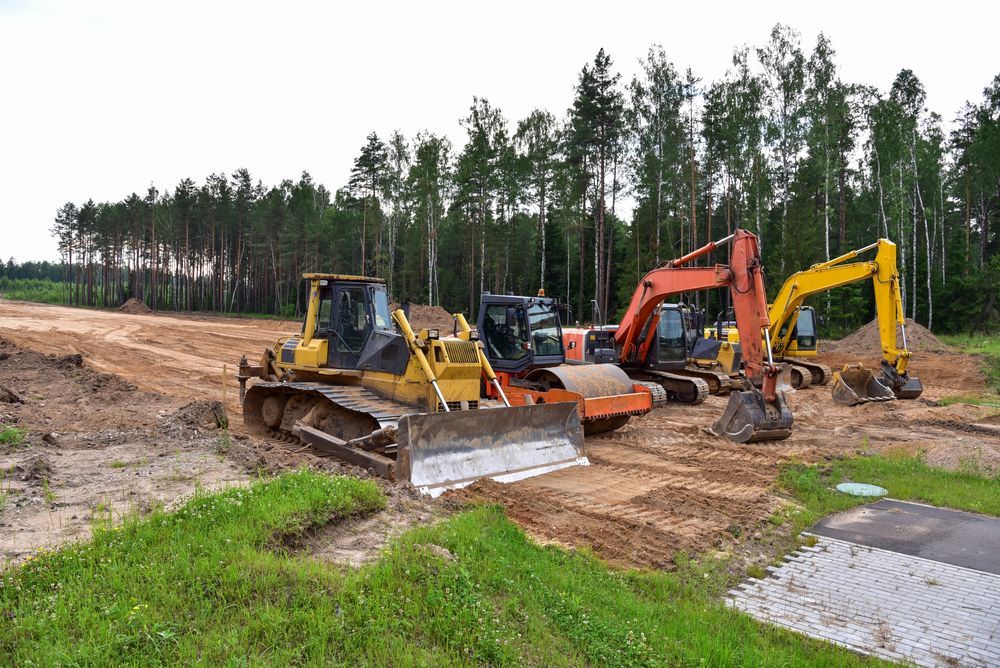
You avoid long-term pavement problems by investing in thorough excavation and grading before asphalt is laid. The equipment used for grading includes excavators for digging, graders for shaping slopes, and vibratory rollers for compacting base material to engineered density standards. Each layer of the base must meet specific thickness and compaction requirements to distribute vehicle loads evenly and prevent the pavement from sagging under stress—a critical step for Connecticut’s mixed glacial soils, which can shift or heave if not properly excavated and replaced with stable aggregate.
After grading is complete, you see a smooth, sloped surface with clear drainage paths that direct runoff toward catch basins or edges rather than allowing water to sit against building foundations or pool in low spots. All Time Paving and Seal Coating ensures the final grade matches design elevations and ties into existing pavement, curbs, and utility structures without creating abrupt transitions or drainage conflicts, ensuring your property is prepared for New England’s heavy snowmelt and seasonal rain events.
This phase of work also identifies underground utilities, removes unsuitable soils that would compress under load, and addresses site-specific challenges such as ledge rock or high-clay deposits common in the Fairfield County area. Grading and digging do not include asphalt paving itself, which follows once the base is prepared, inspected, and approved for the next phase of construction.
What Property Owners Ask About Site Preparation
Excavation and grading involve technical considerations that affect cost, timing, and the final quality of the pavement surface.
What depth of excavation is required for a driveway?
Excavation depth depends on soil conditions and intended use, but residential driveways typically require removing eight to twelve inches of material to accommodate compacted gravel base layers and the asphalt surface.
How does grading prevent water damage?
Grading shapes the pavement surface and base to slope away from buildings and toward drainage points, ensuring that rainwater and snowmelt flow off the pavement instead of soaking into the base and weakening the structure.
What equipment is used for site preparation?
Crews use excavators to dig and remove material, bulldozers to spread and level base stone, graders to fine-tune slopes, and vibratory rollers to compact each layer to the required density for load-bearing stability.
Why does Burlington soil affect grading work?
Local soil conditions, including clay content and seasonal frost penetration, influence how deep the base must be excavated and what type of aggregate is used to create a stable, non-shifting foundation beneath the pavement.
What happens if grading is done incorrectly?
Improper grading leads to poor drainage, water pooling on the pavement, base erosion, and surface cracking or settling as the ground beneath the asphalt shifts under traffic loads and weather cycles.
All Time Paving and Seal Coating is ready to assess your site, handle excavation and grading, and prepare the base for durable asphalt installation in Connecticut.